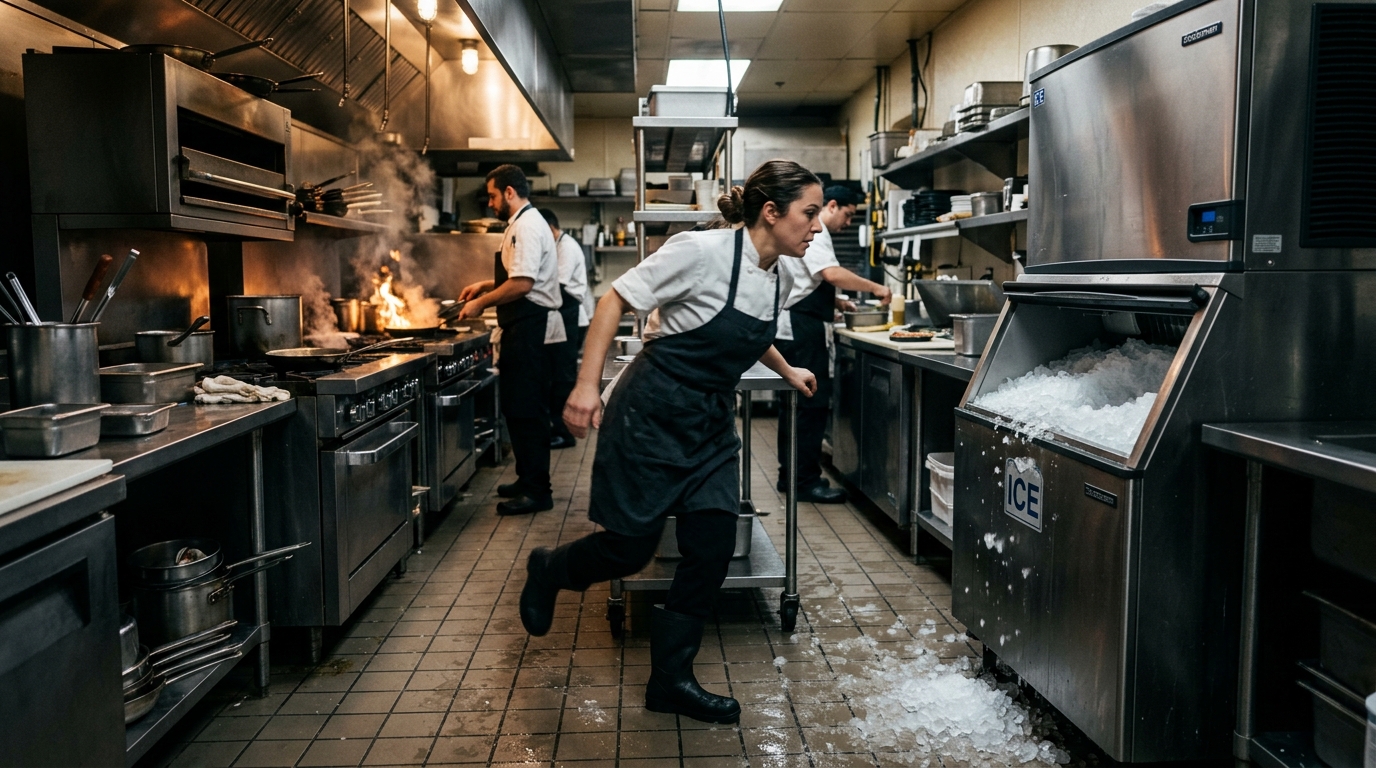
It's 7 PM on a Friday. Your dining room is packed. Your bar is slammed. And your ice machine just stopped working.
This is the scenario no restaurant manager wants to face -- but it happens more often than you'd think. The good news: how you respond in the first five minutes determines whether this becomes a minor hiccup or a full-blown operational crisis.
Here is exactly what to do.
Step 1: Don't Panic -- Assess First
Before you do anything else, take 30 seconds to assess the situation:
Is the machine completely dead, or just producing less ice than usual?
How much ice do you currently have in reserve?
What is your estimated burn rate for the rest of the shift?
Are you running bar service, food service, or both?
This 30-second assessment changes your entire response strategy. If you have two hours of ice in reserve, you have time. If you have 20 minutes, you need to act immediately.
The restaurants that handle ice emergencies best are the ones who call for backup before they are completely out -- not after.
Step 2: Call for Emergency Ice Delivery Immediately
The single most important thing you can do -- and the thing most managers delay too long -- is calling for backup ice before you run out.
Every minute you wait is a minute less of buffer. Delivery takes time even when we are fast. The earlier you call, the more likely your delivery arrives before service is impacted.
Step 3: Ration What You Have
While you are waiting for delivery, implement immediate conservation:
Bar: Prioritize cocktail drinks over iced water service. Use ice for paying beverage orders only.
Kitchen: Shift to dishes that do not require ice. Pause or limit cold appetizer prep.
Server communication: Quietly brief your floor team -- no announcements to guests yet.
Most guests will not notice a thing if your team handles this quietly and professionally.
Step 4: Document the Machine Failure
While the immediate crisis is being handled, assign someone to document:
When the machine was last serviced
What error codes or symptoms appeared
Ambient temperature of the machine room
When the failure first appeared to start
This information is critical for your repair technician and may affect warranty coverage.
Step 5: After the Shift -- Prevent the Next One
Once you are through the emergency, schedule a proper machine inspection. Most commercial ice machine failures are preventable with consistent maintenance. The top three causes of mid-shift failures:
Dirty condenser coils (restricted airflow, overheating)
Low refrigerant levels
Water quality issues causing mineral buildup
A monthly cleaning schedule catches 80% of issues before they become emergencies. We will be publishing a full maintenance checklist soon -- but in the meantime, your machine's manual has the basics.
The Bottom Line
Ice machine failures are stressful, but they do not have to derail your shift. The formula is simple: assess quickly, call for backup early, ration calmly, and document thoroughly. We have helped hundreds of restaurants and bars navigate exactly this situation -- and we are always one call away.